Product Summary
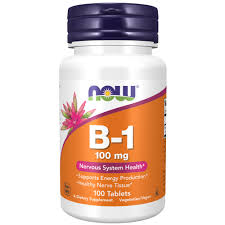
A high-potency supplement delivering 100mg of Vitamin B1 (thiamine HCl) per tablet. This essential water-soluble vitamin supports energy metabolism, nerve function, and cardiovascular health. The 100-tablet bottle offers a 3+ month supply for individuals addressing deficiency or increased metabolic demands.
Key Benefits
- Energy Production: Converts carbohydrates into cellular energy (ATP) via coenzyme function.
- Nervous System Support: Maintains healthy nerve transmission and cognitive function.
- Heart Health: Supports cardiac muscle function and electrolyte balance.
- Deficiency Correction: Prevents/treats beriberi, Wernicke-Korsakoff syndrome, and neuropathy.
- Alcohol Metabolism: Aids in breaking down alcohol byproducts (critical for heavy drinkers).
Composition
- Active Ingredient per Tablet:
- Vitamin B1 (Thiamine Hydrochloride): 100mg
- Equivalent to: 91mg elemental thiamine.
- Vitamin B1 (Thiamine Hydrochloride): 100mg
- Other Ingredients:
- Microcrystalline cellulose, stearic acid (vegetable source), croscarmellose sodium, silica.
- Free From:
- Gluten, GMOs, dairy, soy, nuts, artificial additives.
- Bioavailability:
- Water-soluble form for rapid absorption; excess excreted in urine.
How to Use
- Dosage: Take 1 tablet daily with food.
- Timing:
- Best with breakfast to support daytime energy metabolism.
- For deficiency: 1 tablet 1–2 times daily under medical guidance.
- Duration:
- Maintenance: Safe for long-term use.
- Deficiency correction: 2–4 weeks at higher doses (consult doctor).
- Note:
- Do not exceed 2 tablets daily without medical advice.
- Take with water; avoid crushing (bitter taste).
Potential Side Effects
- Generally Safe: Well-tolerated at 100mg/day.
- Possible Reactions:
- Mild stomach upset, nausea, or skin rash (rare; dose-dependent).
- No known toxicity (water-soluble; excess excreted).
- Precautions:
- Avoid if:
- Allergic to thiamine or B-vitamins.
- Taking certain cancer drugs (e.g., 5-fluorouracil) – may reduce efficacy.
- Consult a doctor if:
- Pregnant/nursing (safe at RDA: 1.4mg daily; high doses require monitoring).
- On diuretics (e.g., furosemide) – may increase thiamine excretion.
- Avoid if:
Frequently Asked Questions (FAQs)
1. How long does one bottle last?
At 1 tablet daily, a 100-count bottle lasts 100 days (3+ months).
2. Why 100mg instead of lower doses?
100mg is a therapeutic dose for deficiency correction. General maintenance requires 1–2mg/day.
3. Can it cause weight gain?
No. B1 supports energy metabolism but doesn’t directly cause weight gain.
4. Is it safe for diabetics?
Yes. May improve glucose metabolism; monitor blood sugar if on diabetes meds.
5. How does this benefit Kenyan users?
- Deficiency Prevention: Counters low thiamine in polished-rice diets (e.g., coastal/Western Kenya).
- Alcohol Support: Aids communities with high alcohol consumption (e.g., chang’aa use).
- Neuropathy Relief: Addresses nerve pain in diabetics (rising diabetes rates in Kenya).
6. Does it interact with malaria meds?
No. Safe with artemisinin-based therapies.
7. Can children use this?
Not recommended for under 12. Pediatric dosing is 0.5–1.5mg/day.
8. Will it turn urine bright yellow?
Yes. Harmless riboflavin (B2) in multivitamins causes this; pure B1 typically does not.
Who Can Benefit?
- Adults with thiamine deficiency (e.g., fatigue, neuropathy, memory loss).
- Individuals with high alcohol intake (depletes thiamine stores).
- Diabetics experiencing peripheral neuropathy.
- People on diuretics or parenteral nutrition (increased thiamine needs).
- Those with malabsorption syndromes (e.g., celiac, bariatric surgery).


Reviews
There are no reviews yet.